



Study Finds Renters are Prioritizing Trust Over Price
In a competitive rental market, tenants are increasingly selective, not just about properties, but about landlords themselves. From poor communication to hidden fees, certain warning signs can quickly turn renters away from a lease.
We surveyed over 900 American renters to find out what their biggest landlord red flags are in 2026, along with their rental preferences, past histories with landlords, and what landlords could do to earn their trust.
72% of Renters Have Passed on a Property Due to Concerns About the Landlord
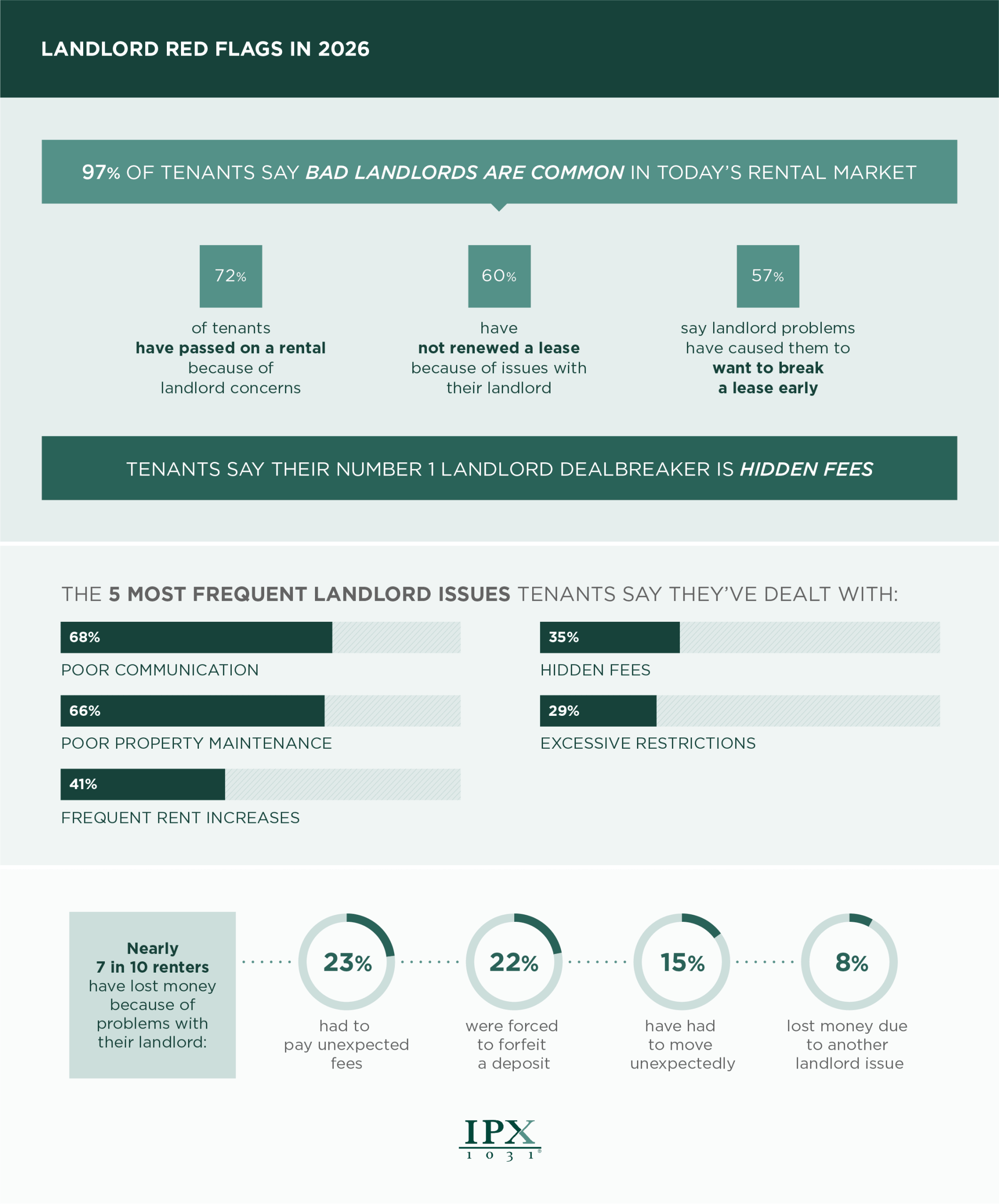
Nearly all renters (97%) believe bad landlords are common today with 43% generally distrusting landlords and 1 in 5 disliking their current landlord. That skepticism influences rental decisions: 72% have passed on a property because of concerns about the landlord, while 60% have chosen not to renew a lease due to landlord-related issues.
When asked to rank their number one overall dealbreaker, the most common answer was hidden fees at 19%. The most common landlord issues tenants have dealt with include poor communication (68%), poor property maintenance (66%), and frequent rent increases (41%).
Nearly 7 in 10 renters have lost money due to issues with a landlord. For 23%, it was due to unexpected fees, 22% from forfeiting a deposit, 15% from having to move unexpectedly, and 8% for other reasons.
When asked what renters think are the biggest challenges landlords face, 45% say keeping up with aging buildings, 20% say dealing with vacancies, and 12% say property taxes.
Nearly 2 in 3 Tenants Prefer Small Landlords to Rental Companies
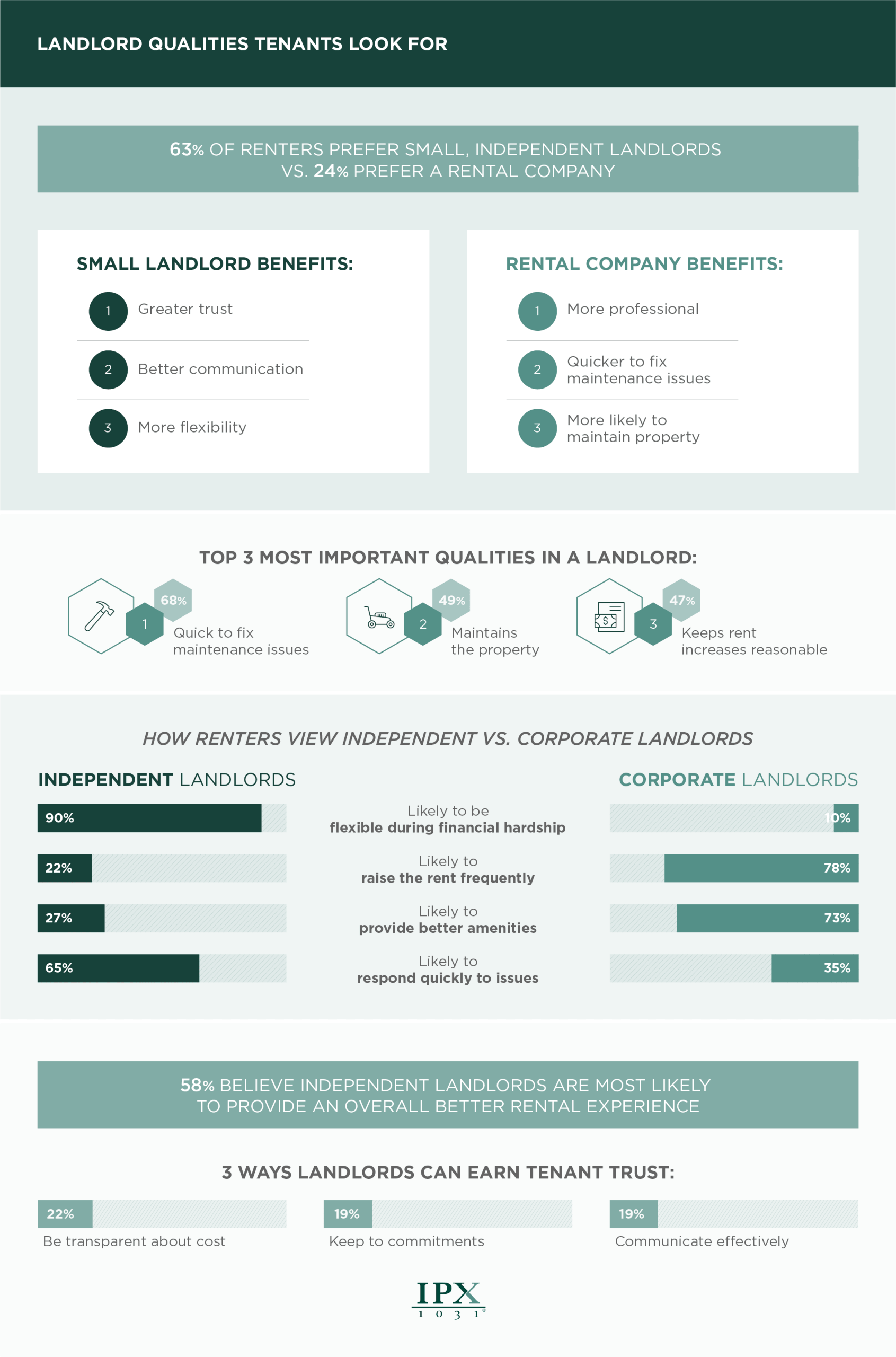
When asked if they would prefer to rent from a small, independent landlord or from a rental company, 63% say they would prefer an independent landlord while 24% would prefer a company, and 14% have no preference.
Reasons Renters Prefer Independent Landlords:
- Greater trust
- Better communication
- More flexibility
Renters associate small, independent landlords with flexibility, communication, and trust. Nine in 10 believe independent landlords are more likely to be flexible during financial hardship, and 65% say they’re quicker to respond to maintenance requests.
Corporate landlords earn higher marks for amenities (73%) and property upkeep (54%), but 78% of renters believe they’re also more likely to raise rent quickly. Overall, 58% say independent landlords provide the better rental experience.
When it comes to the actual management of the property, 57% of respondents would prefer the property be directly managed by the owner.
3 Ways Landlords Can Earn Tenant Trust
While competitive rental pricing still matters, renters say trust plays an equally important role in deciding where to live. Tenants outline the three ways landlords can earn their trust:
- Be transparent about cost – 22%
- Keep to commitments – 19%
- Communicate effectively – 19%
65% Would Prefer to Rent From a Family Member or Friend
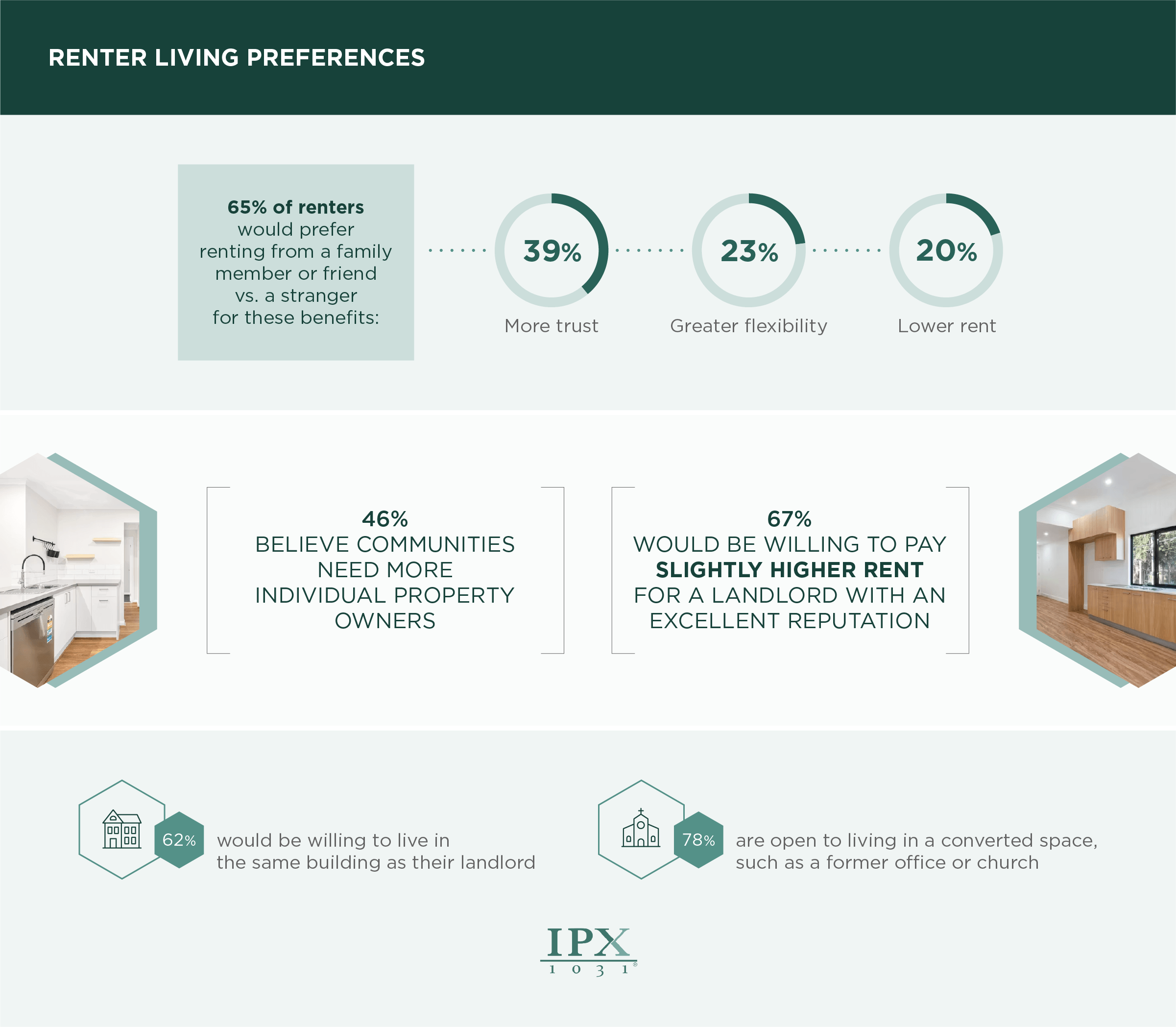
Nearly 2 in 3 (65%) renters surveyed would prefer to rent from a family member or friend as opposed to a stranger. The top reasons? Greater trust (39%), more flexibility (23%), and lower rent (20%).
Tenants also expressed willingness to live in creative situations, with 62% saying they’d be open to living in the same building as their landlord, and 78% to living in a converted space, such as an old office building or a church. In fact, 67% say they would pay slightly higher rent for a landlord with an excellent reputation, and 46% believe communities need more individual property owners.
The rental market is changing, and savvy investors are evolving with it. Whether you’re selling, acquiring, or repositioning investment properties, a 1031 Exchange can help you defer capital gains taxes and preserve more equity for reinvestment. Learn more about Investment Property Exchange Services, Inc. (IPX1031), the nation’s leading 1031 Exchange company, provides the security, expertise, and guidance investors need to safeguard their exchange proceeds, navigate transactions with confidence, and position their portfolios for long-term growth.
Methodology
In June 2026, we conducted a survey of 905 renters across the U.S. about their opinions on landlords and rental properties. Among respondents, 55% identified as women and 43% as men with an average age of 38.
For media inquiries, contact media@digitalthirdcoast.net
Fair Use
When using this data, please cite it correctly by linking to this study and crediting IPX1031.
Read More
America’s Empty Office Statistics
Underperforming Real Estate Assets Ripe for 1031
What Is a 1031 Exchange?
IPX1031® Essentials
