
Report Finds 88% of Americans Want More Prominent Disclosure of Referral Fees
Americans are increasingly questioning whether they can trust recommendations, from real estate agents and financial advisors to influencers and review sites. Hidden referral fees, commissions, and other incentives can shape advice on what’s “best,” often without consumers realizing there’s money behind the advice.
To understand how transparency affects trust, decision-making, and loyalty, we surveyed Americans nationwide about their views on referral fees, professional ethics, and disclosure practices.
2 in 3 Americans are Less Likely to Follow Advice if it’s Incentivized
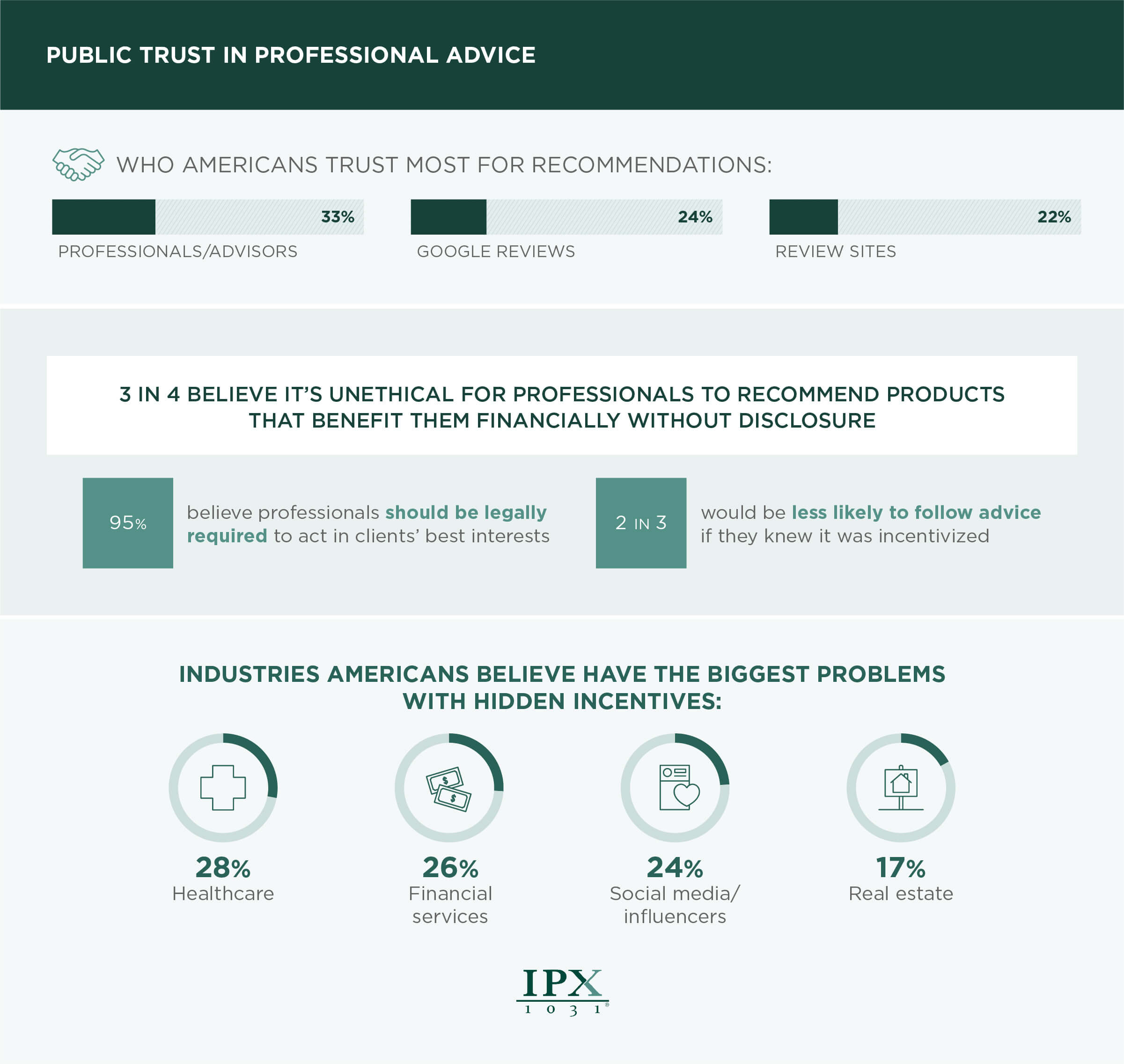
Americans are becoming more cautious about where advice comes from. When asked who they trust most, 1 in 3 Americans say professionals or advisors, followed by Google reviews (24%) and third-party review sites (22%).
However, trust quickly erodes when money is involved: 3 in 4 Americans say it’s unethical for professionals to recommend products that benefit them financially without disclosing it, and an overwhelming 95% believe professionals should be legally required to act in their clients’ best interests.
Additionally, 2 in 3 would be less likely to follow advice if they knew it was incentivized.
Americans also pointed to industries where hidden incentives feel especially problematic:
- Healthcare (28%)
- Financial services (26%)
- Social media/influencers (24%)
- Real estate (17%)
Americans Call for Stronger Rules as Hidden Incentives Erode Trust
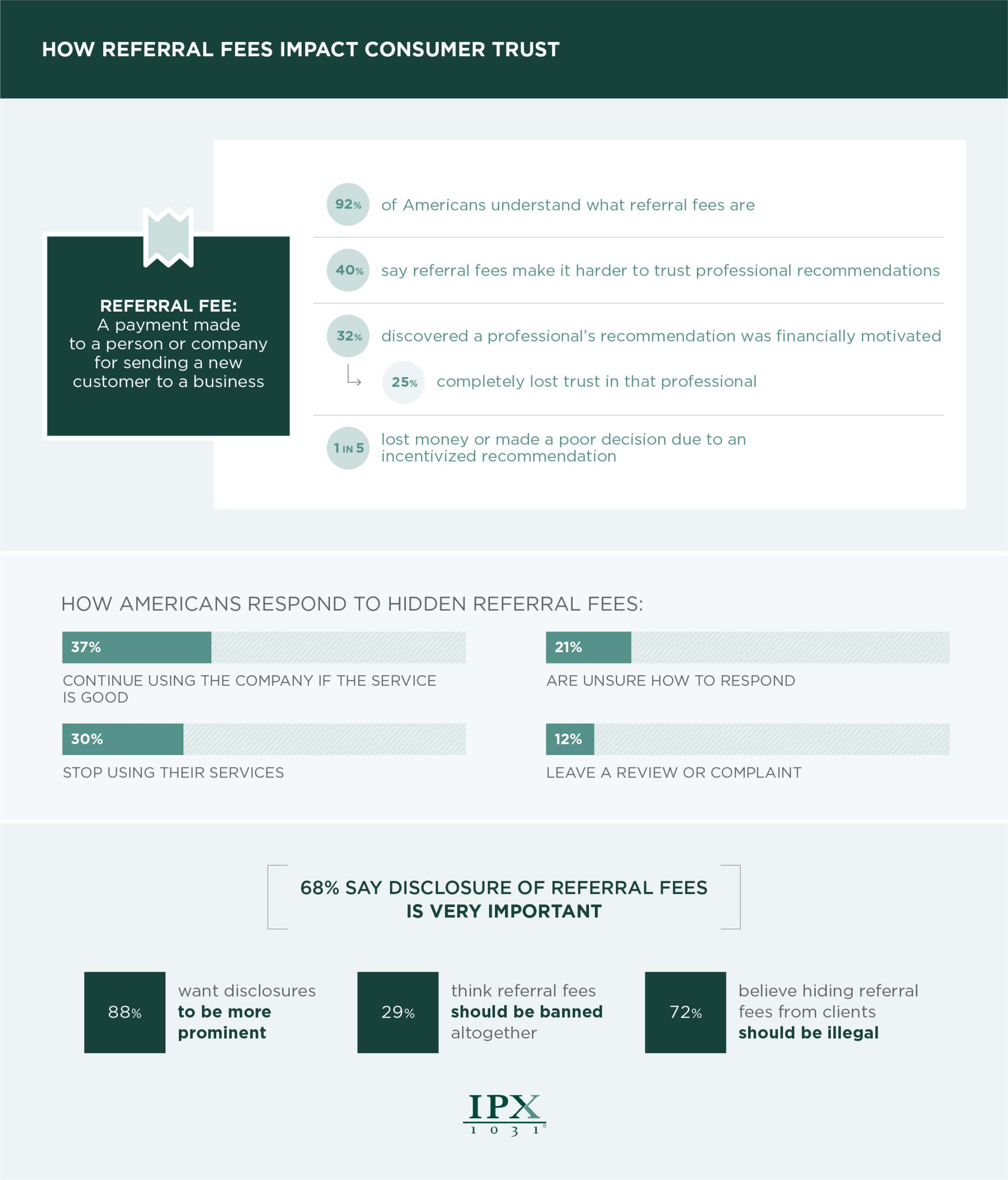
Most Americans are familiar with the concept of referral fees, with 92% understanding that it’s a payment made for sending a new customer to a business. But awareness doesn’t make them more comfortable, as 40% say referral fees make it harder to trust professional recommendations.
Nearly 1 in 3 (32%) have discovered that a professional’s recommendation was financially motivated, and 1 in 4 completely lost trust in that professional.
Not every recommendation helps the consumer – 1 in 5 say they lost money or made a poor decision due to an incentivized recommendation.
How Americans react when they uncover hidden referral fees:
- 37% continue using the company if the service is good
- 30% stop using their services
- 21% are unsure how to respond
- 12% leave a review or complaint
Americans are clear about what they want going forward: 68% say disclosure of referral fees is very important, and 88% want those disclosures to be more prominent. Many want stronger rules altogether with 29% thinking referral fees should be banned. Over 7 in 10 (72%) believe hiding referral fees from clients should be illegal.
Transparency Wins: Americans Reward Honest Professionals
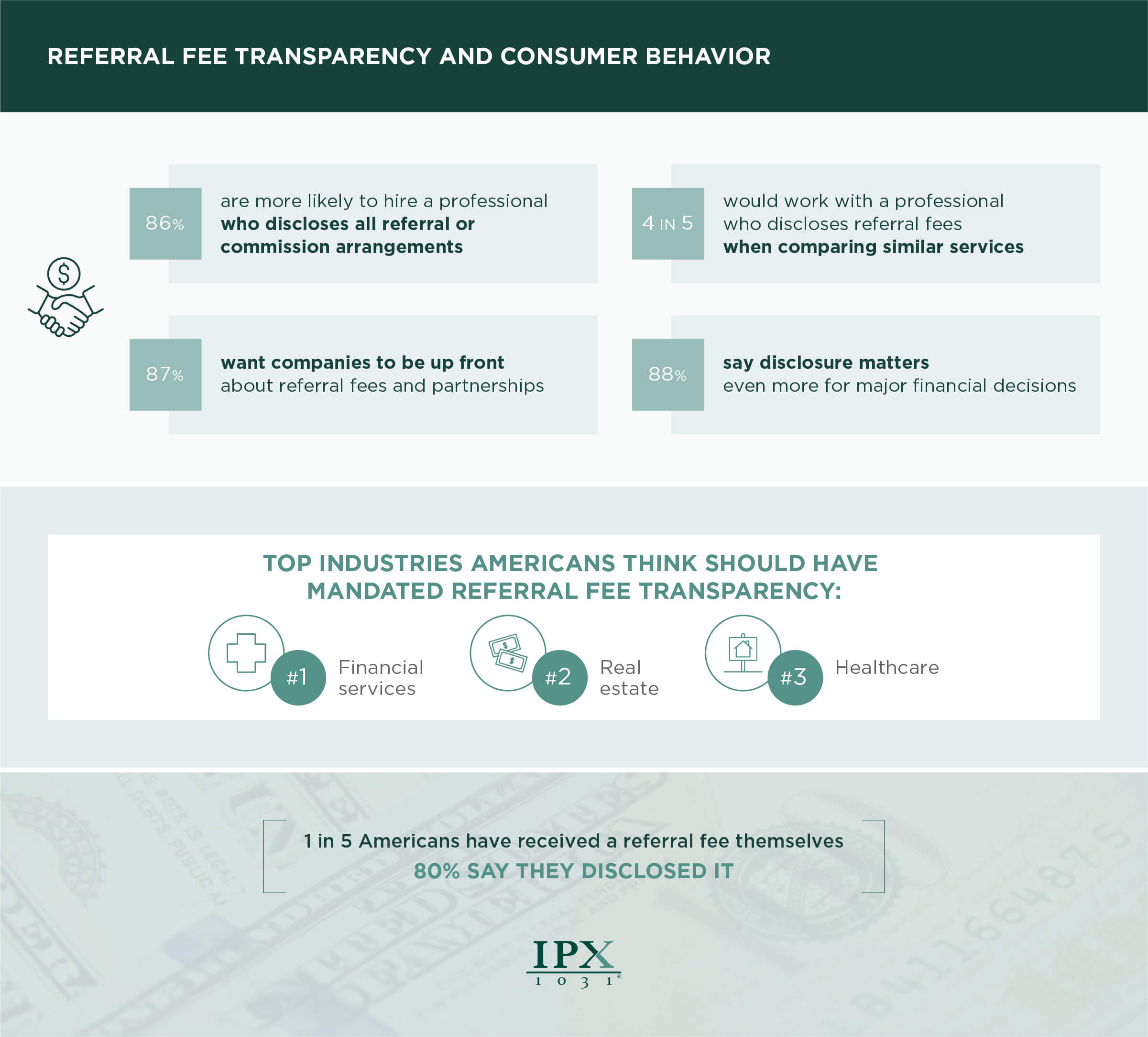
Americans strongly favor professionals who are upfront about financial incentives. Nearly 9 in 10 (86%) Americans are more likely to hire a professional who discloses all referral or commission arrangements. Another 87% want companies to be transparent about referral fees and partnerships.
When comparing similar services, 4 in 5 would choose to work with a professional who discloses referral fees. Nearly 9 in 10 (88%) say disclosure matters even more for major financial decisions like buying a home or making an investment decision.
Industries Americans believe should be required to disclose referral fees:
- Financial services
- Real estate
- Healthcare
Referral fees aren’t uncommon in everyday life. One in five Americans say they’ve personally received a referral fee, and 80% of them reported disclosing it to the person they referred.
If you own investment real estate or are planning a 1031 Exchange, it’s critical to understand that Qualified Intermediary (QI) regulatory tax code compliance is mandatory to preserve the tax benefits of your exchange. Learn more about potential QI risks and regulatory compliance requirements on our QI Risk page.
As the nation’s largest 1031 Exchange company, Investment Property Exchange Services, Inc. (IPX1031) has the expertise, security, and compliance standards you need to safeguard your exchange. Contact us today to start your 1031 Exchange.
Methodology
In November 2025, we conducted a survey of 923 people from across the U.S. about their opinions and experiences with referral fees. Among respondents, 48% identified as male and 51% as female with an average age of 45.
For media inquiries, contact media@digitalthirdcoast.net
Fair Use
When using this data and research, please attribute by linking to this study and citing IPX1031.
Read more:
Is Your Qualified Intermediary Putting Your 1031 at Risk?
Study: Most Americans Say Referral Fees and Revenue Sharing Are Unethical or Questionable
How Important is Your Qualified Intermediary?
1031 Exchange and Defer? Or Sell and Pay Taxes?
Opportunities of the 1031 Exchange
Capital Gains Estimator
IPX1031 Knowledge Center
