
For the latest data on fraud and identity theft in the U.S., check out our 2026 report
Referenced in:


In the Age of AI, Americans Lost $730 to Scams in the Last Year
Scammers are getting smarter and millions of Americans are paying the price. From identity theft to investment schemes, fraud is evolving faster than ever.
IPX1031’s 2025 Fraud and Identity Theft Report surveyed Americans about their experiences with scams and analyzed Federal Trade Commission data to identify the states with the highest rates of fraud reports per 100,000 residents.
Half of Americans Have Been Scammed
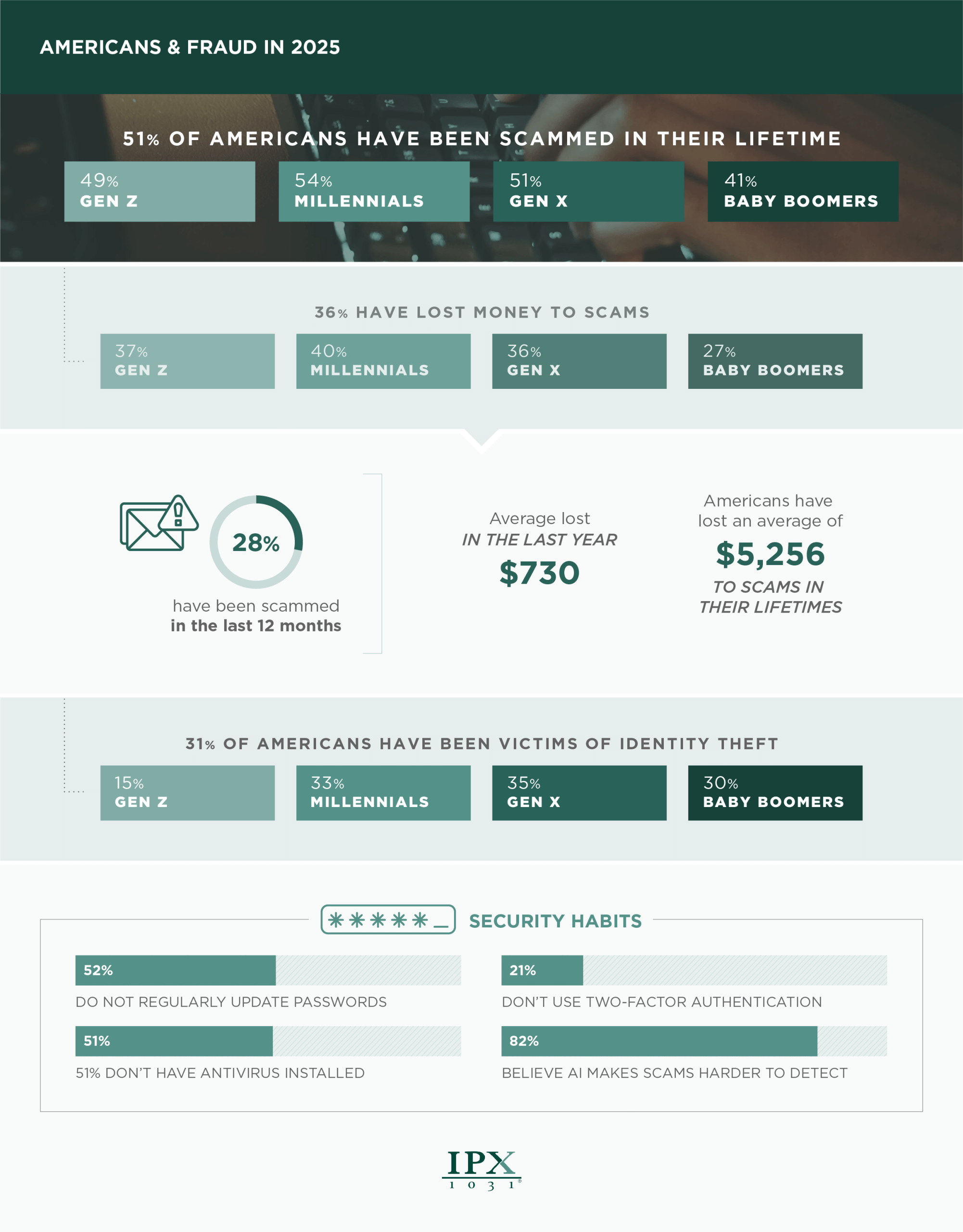
More than half of Americans (51%) have been scammed at some point in their lives. Broken down by generation, Millennials are most likely to have been victims (54%), followed by Gen X (51%), Gen Z (49%), and Baby Boomers (41%).
More than 1 in 3 (36%) have lost money to scams, including 40% of Millennials, 37% of Gen Z, 36% of Gen X, and 27% of Baby Boomers.
28% of Americans Have Been Scammed in the Last 12 Months
Many Americans have been scammed recently, with 28% saying they’ve been scammed in the last year, losing an average of $730. When looking at lifetime losses, the average comes in at $5,256.
Identity theft is another major threat: nearly 1 in 3 (31%) Americans report being victims. Yet many admit they’re not taking strong security measures:
- 52% don’t regularly update passwords
- 51% don’t use antivirus software
- 21% don’t enable two-factor authentication
Adding to the threat, 82% of Americans believe artificial intelligence (AI) is making scams harder to spot.
Top Ways Scammers Are Targeting Americans
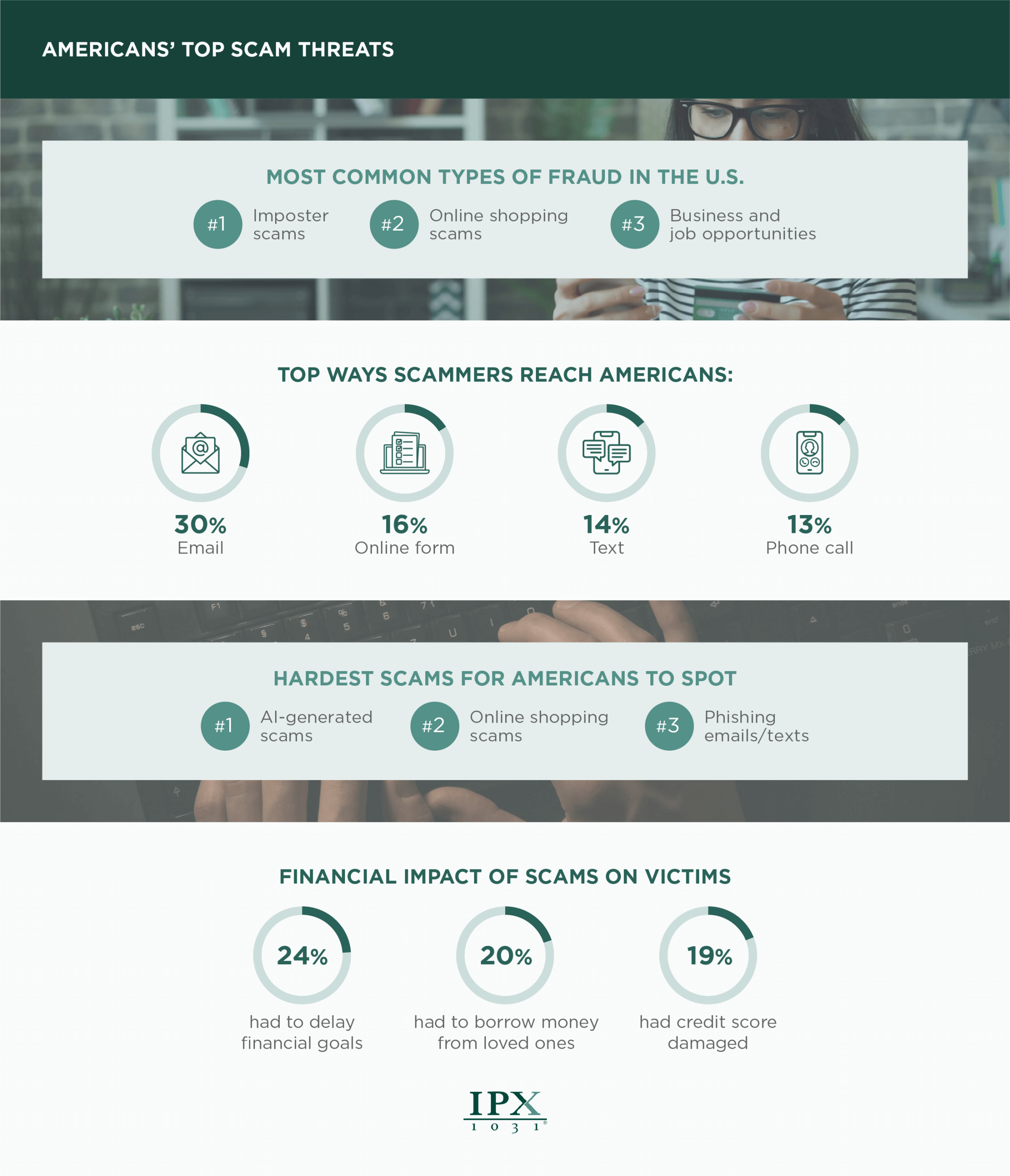
According to the FTC, the most common types of fraud in the U.S. are imposter scams, online shopping scams, and business and job opportunities.
Survey findings show the top ways scammers contact victims: email (30%), online form (16%), text (14%), and phone call (13%).
The scams Americans find hardest to detect:
- AI-generated scams
- Online shopping scams
- Phishing emails/texts
Among those who lost money, top financial consequences included delaying financial goals (24%), borrowing money from loved ones (20%), and damaged credit scores (19%).
Fraud Hotspots: The States With the Highest Scam Rates
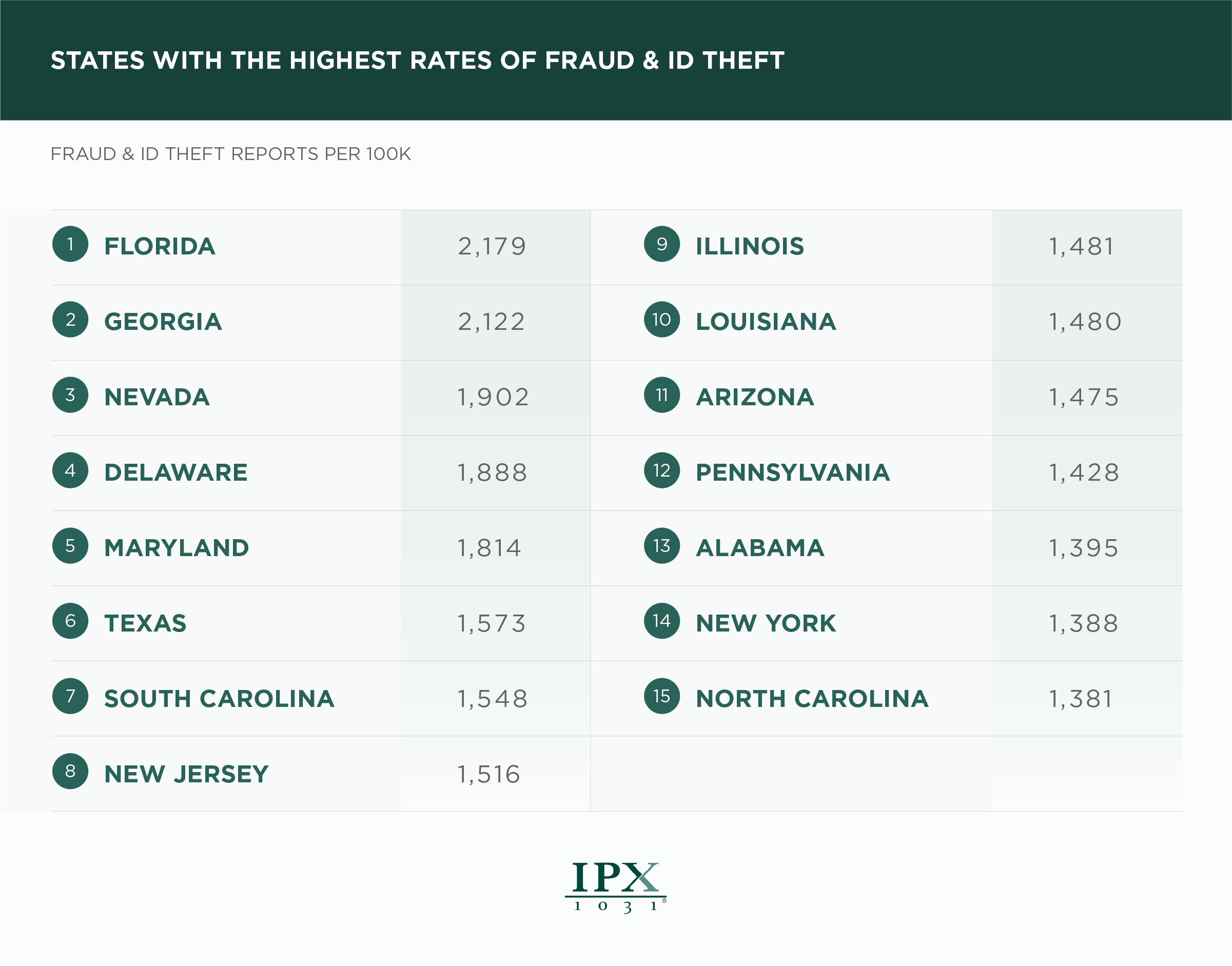
When it comes to the states with the highest rates of fraud and ID theft, Florida ranks #1. The Sunshine State had 2,179 reports of fraud and ID theft per 100,000 residents.
Georgia is #2, with Nevada, Delaware, and Maryland rounding out the top five.
Top 10 States for Fraud & ID Theft:
- Florida
- Georgia
- Nevada
- Delaware
- Maryland
- Texas
- South Carolina
- New Jersey
- Illinois
- Louisiana
Investment Property Exchange Services, Inc (IPX1031) is the nation’s largest and most secure 1031 Qualified Intermediary (QI). If you are considering a Tax Deferred 1031 Exchange for your investment property, it’s critical that the funds from your sale are protected. IPX1031 has the financial assurances, security and expertise essentials to protect your funds and provide answers and guidance throughout the exchange process. It’s important to make sure you’re using a QI who is not putting your 1031 at risk. Learn about how truth and transparency in financial services are top of mind to U.S. consumers.
Methodology
In September 2025, we conducted a survey of 1,002 people from across the U.S. about their experiences with fraud and identity theft. Among respondents, 49% identified as female and 49% as male with an average age of 44. We also analyzed data from the Federal Trade Commission to determine the states with the most fraud and identity theft reports in 2024.
For media inquiries, contact media@digitalthirdcoast.net
Fair Use
When using this data and research, please attribute by linking to this study and citing IPX1031.
Read more:
Americans’ Experiences with Fraud and ID Theft Data 2024
Is Your Qualified Intermediary Putting Your 1031 at Risk?
Your 1031 Funds Are Safe
Safety & Security for Exchangers
Take Steps to Combat 1031 Cyber Fraud
How Important is Your Qualified Intermediary?
Capital Gains Estimator
IPX1031 Knowledge Center
